 Skip to content

Shopify’s built-in SEO tools are a starting point, not a solution — and in competitive niches, that distinction costs store owners thousands of dollars in lost organic revenue.
The platform’s “it just works” reputation is one of the most persistent myths in ecommerce. Out of the box, Shopify gives you meta fields, a sitemap, and canonical tags. But the moment you scale into a competitive category, those defaults become liabilities rather than assets.
Technical debt accumulates fast on Shopify. The platform carries specific SEO limitations — including restricted robots.txt editing and rigid URL structures — that a generalist SEO simply does not have the tools or training to resolve. Duplicate content across collection pages and product variants is another deeply embedded issue. Shopify generates multiple URLs for the same product depending on how a customer navigates the store, and without deliberate intervention, search engines index conflicting versions of the same page.
Liquid code — Shopify’s proprietary templating language — is where most general SEO strategies break down entirely. Structured data, canonical logic, and pagination all run through the theme layer, which means fixing indexing problems requires someone who can read and modify code, not just update a meta description field.
That is precisely why the role of a Shopify SEO expert has emerged as a hybrid discipline, sitting at the intersection of technical development and search marketing. And when you start looking at where this rare combination of skills is available at scale, the conversation quickly turns toward one particularly compelling talent market — which is exactly where finding a qualified Shopify SEO expert in Bangladesh becomes a genuinely strategic decision.
The Strategic Advantage of Tapping into Bangladesh’s SEO Talent Pool
Bangladesh has quietly become one of the most compelling sources of high-caliber ecommerce SEO talent in the global digital economy.
Digital growth fueling expertise. Bangladesh’s IT-ITES industry is scaling to a global level, producing specialists who are recognized and actively hired on major freelance platforms worldwide. This is not a market of generalists padding out profiles — it is a deep talent pool shaped by competitive demand, rigorous self-education, and consistent exposure to international client standards. And as internet penetration in Bangladesh reached 54.18% by June 2025, the digital literacy underpinning that talent pool has grown considerably stronger.
Cost-to-value ratio. What makes this particularly compelling for global ecommerce brands is the economic equation. You gain access to an ecommerce SEO specialist with senior-level command of technical audits, structured data, and content strategy — at a fraction of what equivalent expertise costs in North America or Western Europe. That gap is not a signal of lower quality; it reflects regional cost-of-living differences, not a skills deficit.
Value Proposition: Hiring from Bangladesh’s SEO talent pool means obtaining globally competitive strategy, deep platform knowledge, and measurable results — without absorbing the overhead costs typical of Western agencies.
Global mindset, local rates. Bangladeshi consultants who work regularly with international brands develop an instinctive understanding of what Western audiences expect. That cross-cultural fluency tends to produce more relevant keyword strategies, sharper content positioning, and stronger conversion-oriented thinking — which feeds directly into the technical execution covered in the next section.
Technical Shopify SEO: Beyond Basic Meta Tags
A true shopify expert seo engagement goes far deeper than title tags and meta descriptions — it starts with the structural and code-level issues that silently drain a store’s organic visibility.
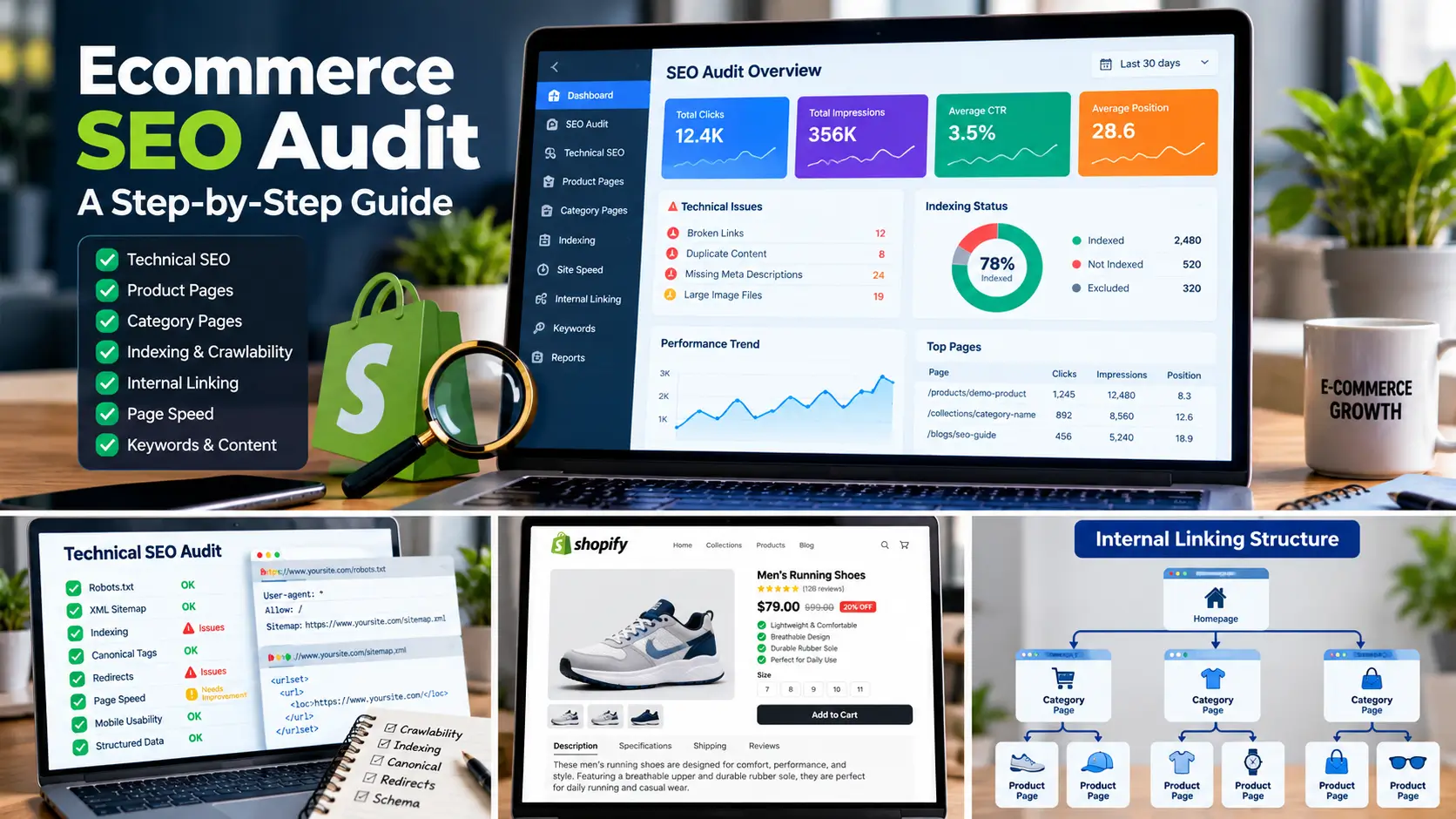
Shopify’s platform is powerful, but it introduces a predictable set of technical liabilities. Collection pages are a common source of duplicate content, because Shopify generates multiple URL paths for the same product depending on the navigation path a user takes. Left unaddressed, these duplicate URLs dilute crawl equity and confuse search engines about which page to rank. A full Shopify SEO audit must include technical fixes for indexing, product page optimization, and collection page architecture — not just surface-level content tweaks.
Core technical areas a skilled Shopify SEO specialist will address:
- Duplicate content in collection pages — identifying and resolving Shopify’s canonical URL conflicts to consolidate ranking signals.
- Liquid code optimization — refining theme-level code to reduce render-blocking resources and improve Core Web Vitals scores, which directly influence both rankings and conversion rates.
- Advanced Schema markup — implementing structured data for products, reviews, and breadcrumbs so search engines can display rich results that drive higher click-through rates.
- App-induced bloat management — auditing installed apps for unnecessary scripts that add page weight, then removing or deferring them to protect load speed.
And these issues compound quickly. A store running a dozen third-party apps without script management can see PageSpeed scores drop enough to hurt both rankings and checkout completion rates. In practice, fixing app bloat alone tends to produce measurable improvements in bounce rate within weeks of implementation. Technical precision at this level is what separates a genuine specialist from a generalist — and it sets the foundation for the kind of AI-driven visibility strategies that are rapidly reshaping how Shopify stores get discovered.
AI-Driven SEO: The New Frontier for Shopify Merchants
Traditional SERP rankings are no longer the finish line for Shopify merchants — in the age of ChatGPT, Perplexity, and other large language models, visibility inside AI-generated answers has become just as critical as a first-page Google result.
The shift in search behavior is reshaping how ecommerce stores compete for attention. When a shopper asks an AI assistant for product recommendations or store comparisons, Google rankings alone do not guarantee your brand gets mentioned. This is where Generative Engine Optimization (GEO) enters the picture. Unlike conventional SEO, which focuses on crawlable content and backlink profiles, GEO prioritizes structured, authoritative, and citation-worthy content that LLMs will surface when generating responses. Getting your shopify seo settings aligned with both traditional and AI-driven signals is no longer optional — it is a competitive necessity.
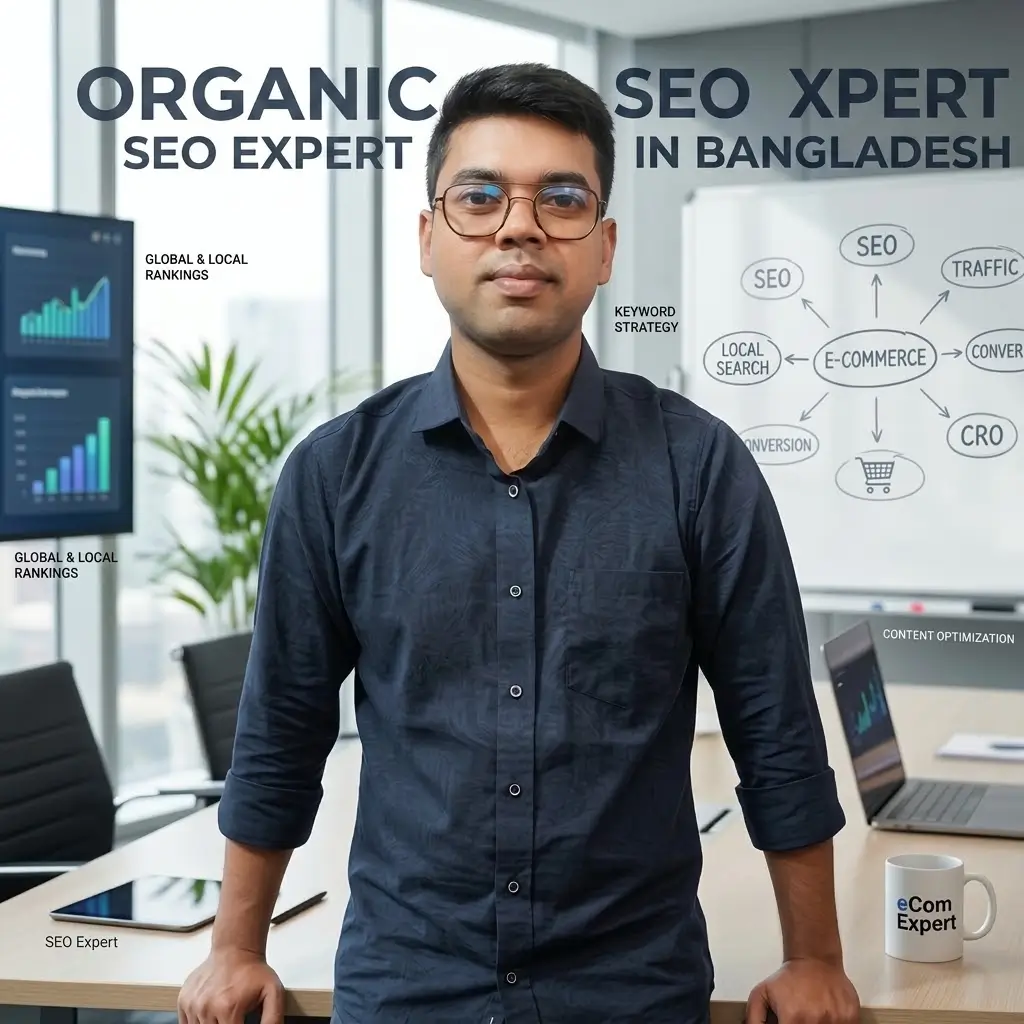
Bangladeshi SEO experts are moving quickly to meet this demand. Top Shopify SEO specialists are now positioning themselves as AIO, AEO, and GEO practitioners to stay ahead of 2026 search trends, building strategies that earn brand citations inside AI platforms, not just blue-link rankings. Practitioners like Ahsan Habib represent this hybrid approach — combining proven on-page fundamentals with newer AI-visibility frameworks that ensure Shopify stores remain discoverable regardless of how search behavior continues to evolve. That blend of traditional discipline and forward-looking strategy is precisely what separates elite talent from generalists. Knowing how to identify that caliber of expert, though, requires its own set of criteria.
Evaluating the Best SEO Experts in Bangladesh: What to Look For
Finding the best SEO expert in Bangladesh for your Shopify store means looking past surface-level credentials and asking sharper questions about platform depth, market awareness, and accountability.
The Bangladeshi freelance and agency market is large enough that quality varies considerably. A strong checklist narrows the field fast:
- Shopify-specific portfolio. Request case studies from Shopify-only stores, not general ecommerce sites. Shopify has a distinct technical architecture — theme liquid files, URL structures, and app conflicts — that generic SEO experience does not address. A consultant who cannot walk you through a real Shopify audit on demand is not the right fit.
- International market fluency. Targeting US, UK, or Australian buyers demands an understanding of those markets’ search behavior, not just local keyword logic. Ask how they handle hreflang, currency-based landing pages, and cross-border content strategy.
- Technical and content balance. In practice, the strongest performers hold both skill sets. An expert who excels at Core Web Vitals but cannot develop a product-led content cluster — or vice versa — will leave revenue on the table.
- Transparent pricing and ROI reporting. SEO pricing in Bangladesh varies significantly, so look for consultants who publish clear USD cost guides and deliver structured monthly reports tying rankings directly to revenue outcomes, not just traffic volume.
Vetting on these four criteria consistently filters out generalists and surfaces specialists worth a long-term engagement — which is exactly the conversation the next section picks up.
The Bottom Line: Why Specialized Expertise Trumps Generic Services
Shopify stores that rely on generic SEO services consistently leave organic traffic — and revenue — on the table, because Shopify’s unique technical architecture demands a specialist who understands it from the inside out.
Shopify’s technical layer is not interchangeable with other platforms. Canonical tag handling, duplicate URL patterns generated by collections, and JavaScript-rendered content all create challenges that a generalist SEO practitioner is likely to misdiagnose. And while Shopify powers millions of stores globally, only those with optimized technical settings capture the top 1% of organic traffic, which means a platform-agnostic approach is rarely enough.
The Bangladesh advantage is real and measurable. Merchants who work with Shopify SEO specialists based in Bangladesh access deep platform knowledge at a fraction of the cost charged by Western agencies — without sacrificing technical depth or strategic sophistication. That cost efficiency translates directly into a larger budget available for content, link acquisition, and paid amplification.
GEO and AI-driven visibility have shifted from optional to mandatory. As earlier sections outlined, appearing in ChatGPT, Perplexity, and other AI-generated answer surfaces now sits alongside traditional SERP rankings as a core performance metric. Any Shopify SEO strategy that ignores this shift is already operating behind the curve.
Vetting for international experience remains the final filter. Technical competence matters, but a specialist who has delivered results across multiple markets — managing hreflang, currency localization, and cross-border trust signals — is the caliber of partner that SMEs need for sustainable global growth. The right expert is not just available; they are findable, if you know what to look for. The next step is connecting with one.
Scaling Your Shopify Store with Ahsan Habib
Sustainable Shopify growth in 2025 demands a specialist who can blend traditional technical SEO with AI-driven discovery — and that is exactly the gap Ahsan Habib is built to close.
Modern ecommerce visibility no longer lives on Google’s first page alone. It spans AI Overviews, voice search, and generative answer engines. A Shopify store that relies on a single-channel strategy — or a generalist agency juggling dozens of platform types — will consistently underperform against competitors who invest in platform-specific, forward-looking expertise.
Ahsan Habib positions his practice squarely around small and mid-market Shopify merchants who need global reach without enterprise-level overhead. The focus is deliberate: Shopify’s architecture, Shopify’s buying signals, and Shopify’s conversion pathways. That specificity tends to produce compounding results — organic rankings that hold, traffic that converts, and visibility that extends into international markets without requiring a complete strategic rebuild every few months.
And the goal throughout is sustainability, not short-term rank manipulation. In practice, this means technical audits that eliminate crawl debt, content strategies aligned with buyer intent, and structured data implementations that keep product listings eligible for rich results. Every decision is made with long-term global visibility in mind.
If your Shopify store is ready to move from stagnant traffic to scalable organic growth, start a consultation with Ahsan Habib and get a strategy built specifically for your market, your products, and your next stage of growth.




2 Responses